

Comparison of aquatic system models using outdoor mesocosm data for ecological risk assessment, part II: results and outlooks
Authors: Waterborne's Chiara Accolla, Amelie Schmolke, Nika Galic, Steve Bartell, Daniel Dawson, Klaus Peter Ebke, Jana Gerhard, Analise Lindborg, Ann-Kathrin Loerracher, Isabel O’Connor, Robert Pastorok, Damian Preziosi, Brandon Sackmann, Conner Schultz, Nele Schuwirth, Tido Strauss, Roman Ashauer
February 27, 2026 | SETAC's Integrated Environmental Assessment and Management
Abstract: Mechanistic effect models are important research and decision-support tools in ecology and ecological risk assessment (ERA). A way to foster model utilization and increase confidence in their results in ERA is to compare different models developed to represent the same experimental system. Here, we present the results of such a ring study conducted to examine the feasibility and capability of four aquatic system models (ASMs) to represent mesocosm data and evaluate whether such models could be used as an extension of mesocosm experiments in support of ERA. The ring study methodology is described in a companion article published alongside this article. The four models we tested were AQUATOX, CASM, StoLaM+, and Streambugs. These ASMs were calibrated to represent the biological communities in mesocosms with (treatment) and without (control) the application of azoxystrobin. Mesocosm data were also available to perform model control and treatment validation. We show that the models, especially two of them, performed very well in reproducing the control dynamics according to the calibration criteria we set up, and the control validation simulations confirmed those scores. Models also reproduced the more evident effects (including indirect ones). We could identify similarities among the models’ challenges, crucial data needs, and common knowledge gaps about mesocosm communities. The ring study also highlighted some weaknesses in the defined model performance criteria, which did not account for model differences and resulted in favoring some models over others. Despite the detailed model comparison, we could not quantify to what extent different performances were due to model structures, implemented processes, or calibration techniques. This ring study established a basis for adjusting models to mesocosm studies and proposed possible solutions towards advancing capabilities in using ASMs to inform ERA.
Revisions to the Endangered Species Act Redefines “Harm”
Revisions to the Endangered Species Act Redefines “Harm” August 26, 2026 | Endangered Species | On July 7th, the U.S.…
READ MORE
Gulf Hypoxia Action Plan Update
Gulf Hypoxia Action Plan Update August 26, 2026 | Field Studies | Waterborne’s field and data services teams have long supported…
READ MORE
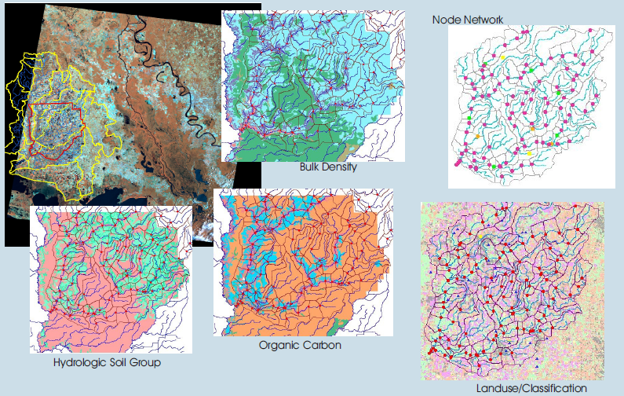
The Global Matchup: Rice Modeling Around the World
The Global Matchup: Rice Modeling Around the World July 27, 2026 | Modeling | Amy Ritter and Marty WilliamsThis year’s…
READ MORE

Beyond the Spectacle: The Environmental Effects of Fireworks
Beyond the Spectacle: the Environmental Effects of Fireworks July 21, 2026 | Climate Change | Like shooting stars zooming across…
