

Summer’s Algae Stresses the Importance of Nutrient Monitoring
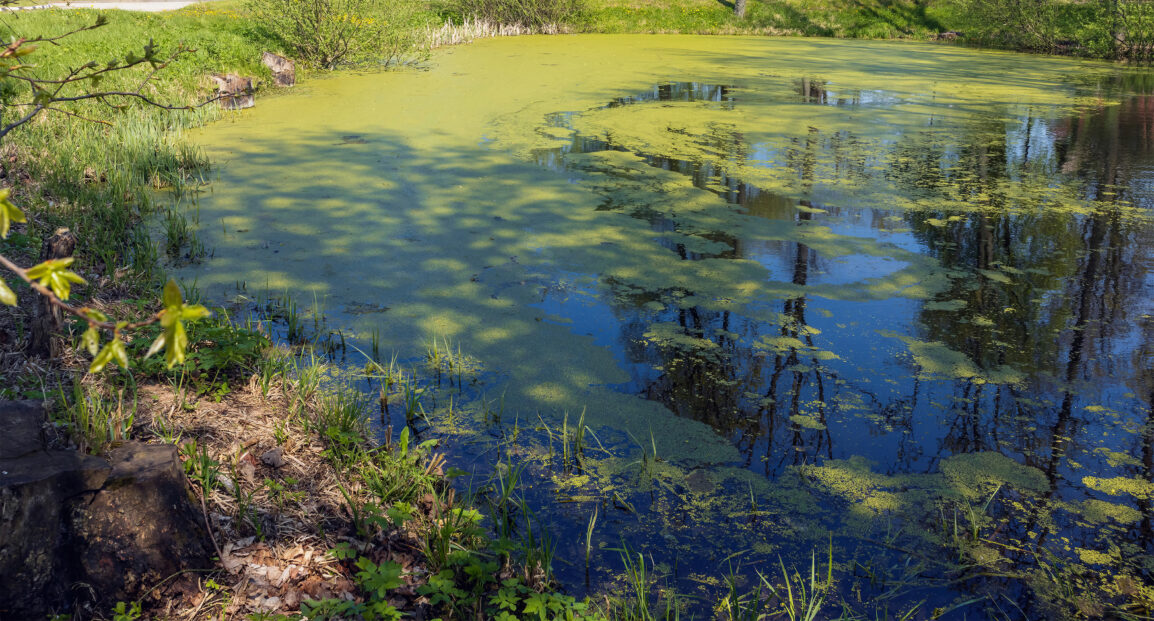
Green. Arguably the color of summer, green is found everywhere, from beautifully tended lawns to rows of corn growing in the field. Warmer temperatures accelerate organic growth until the color appears everywhere — including in our bodies of water. And while bright green mats of algae covering a pond or lake may seem like a seasonal nuisance, they are often a visible sign of a much larger water-quality issue tied to a nutrient imbalance in the surrounding environment.
Within the agricultural world, nutrients represent both opportunity and risk. Nitrogen and phosphorus are essential for healthy crop growth and agricultural productivity, yet when these nutrients move beyond the plant and enter nearby waterways, they can contribute to harmful algal blooms, oxygen depletion, impaired aquatic habitats, and declining water quality. Understanding where these nutrients originate and how they move through a watershed is critical to preventing water-quality degradation and reducing fertilizer losses. That's where nutrient monitoring comes in.
Nutrient monitoring allows us to identify trends, measure nutrient loads, evaluate the effectiveness of Best Management Practices (BMPs), and support science-based decision-making by collecting and analyzing water-quality data over time. Effective nutrient monitoring provides valuable insights into how weather patterns, land use changes, fertilizer application schedules, irrigation practices, and watershed conditions influence nutrient transport. Rather than relying on assumptions, our Waterborne scientists provide measurable data that help our clients understand what is working and where improvements can be made. Because nutrient monitoring delivers benefits that extend far beyond regulatory compliance, growers and land managers see an added benefit from using data to improve nutrient-use efficiency and maximize the return on their agricultural efforts. As fertilizer costs continue to fluctuate, ensuring nutrients remain where they are intended has become increasingly important.
Not limited to agriculture, nutrient monitoring is equally important for managing watersheds, conservation programs, and environmental restoration projects. Reliable monitoring data allows stakeholders to quantify environmental outcomes, prioritize investments, and assess whether conservation efforts are producing measurable improvements in water quality, thereby supporting long-term planning and resource management. By integrating monitoring data with advanced analytical tools and numerical models, we can identify nutrient sources, understand transport pathways, predict future conditions, and evaluate management alternatives before making costly decisions.
At Waterborne, nutrient monitoring is more than collecting samples; it's about transforming complex environmental data into actionable intelligence. Our scientists design and implement monitoring programs tailored to each client's objectives, whether to evaluate watershed health, measure BMP performance, assess nutrient reduction strategies, or support regulatory requirements. By combining field sampling, laboratory coordination, spatial analysis and modeling (within a GIS framework), statistical evaluations across design strategies, and watershed modeling, we provide a comprehensive understanding of nutrient dynamics across a landscape.
While at first glance, nutrient monitoring may seem trivial, the reality is a more complex set of entangled interactions and boundaries that connect to a broader environmental picture. The results are practical solutions that protect water quality, improve operational efficiency, demonstrate environmental leadership, and allow our clients to make informed decisions for the future.

Revisions to the Endangered Species Act Redefines “Harm”
Revisions to the Endangered Species Act Redefines “Harm” August 26, 2026 | Endangered Species | On July 7th, the U.S.…
READ MORE
Gulf Hypoxia Action Plan Update
Gulf Hypoxia Action Plan Update August 26, 2026 | Field Studies | Waterborne’s field and data services teams have long supported…
READ MORE
The Global Matchup: Rice Modeling Around the World
The Global Matchup: Rice Modeling Around the World July 27, 2026 | Modeling | Amy Ritter and Marty WilliamsThis year’s…
READ MORE

Beyond the Spectacle: The Environmental Effects of Fireworks
Beyond the Spectacle: the Environmental Effects of Fireworks July 21, 2026 | Climate Change | Like shooting stars zooming across…
