

Beyond the Spectacle: The Environmental Effects of Fireworks
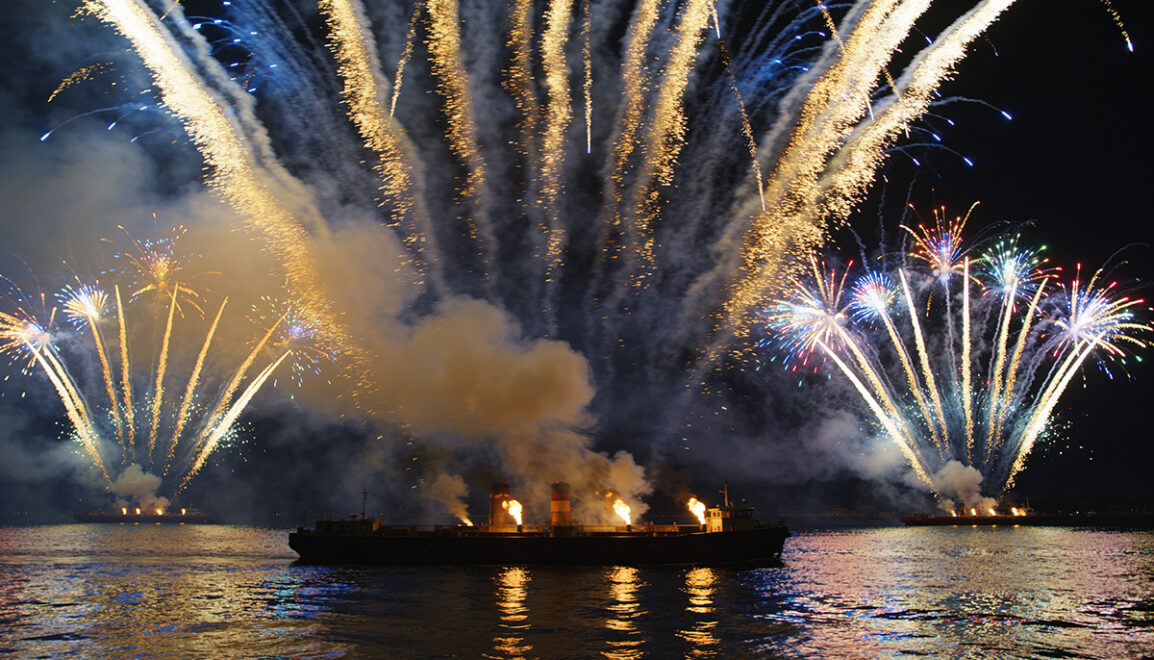
Like shooting stars zooming across the night sky, fireworks instill a sense of wonder and excitement. Their bold colors and expressive shapes illuminate our summers in backyards, small towns, and big cities all across America. This July, our country's 250th anniversary led to bigger, bolder shows that broke global records. Once the show is over and the smoke clears, however, the damage these spectacles cause to our environment, particularly our waterways, becomes clear.
Firework formulations rely on a variety of chemical compounds to produce their dazzling color and visual effects. Manufacturers mix metals such as barium, strontium, copper, aluminum, magnesium, and titanium, alongside oxidizers such as perchlorates to help sustain combustion. When one considers that beyond the metals and oxidizers, each firework's bang creates a slew of physical debris, including paper, cardboard, plastic, and shell fragments, it's easy to see how these could cause environmental harm. Each firework's by-products have to land somewhere, and tend to accumulate in rivers, lakes, estuaries, and coastal environments.
Wildlife does not share our love of fireworks. Loud explosions and bright flashes may disrupt nesting birds, fish, amphibians, and other aquatic species during sensitive breeding and feeding periods. Mammals and birds may be spooked by the loud noises and find themselves trapped in precarious situations. Debris left behind can pose entanglement or ingestion hazards for wildlife, while shoreline litter may eventually break down into smaller plastic fragments that are more difficult to remove.
Studies have documented short-term increases in concentrations of some metals and perchlorate in surface waters following large fireworks displays. In 2019's "Perchlorate behavior in the context of black carbon and metal cogeneration following fireworks emission at Oak Lake, Nebraska.", Kumar, M., Snow, D.D., Li, Y., & Shea, P. evaluated perchlorate together with firework-associated metals, demonstrating deposition of both following fireworks displays. A 2016 U.S. Geological Survey study, "Perchlorate and Selected Metals in Water and Soil within Mount Rushmore National Memorial, 2011-15", demonstrated elevated perchlorate persisted in groundwater and surface water years after fireworks ended.
While these elevated levels often decline through dilution, dispersion, or natural processes, repeated events or displays over smaller water bodies — such as annual fireworks shows or summer-long spectaculars — may prolong exposure and contribute to localized changes in water chemistry. This is where environmental monitoring can play an important role in understanding the cumulative effects of fireworks on aquatic systems. Water quality sampling before and after major events, sediment analysis, and biological assessments provide valuable data to evaluate changes in contaminant levels and ecosystem health. These scientific observations can help communities balance public celebrations with effective environmental stewardship by informing decisions on display locations, cleanup practices, and long-term resource management.

Revisions to the Endangered Species Act Redefines “Harm”
Revisions to the Endangered Species Act Redefines “Harm” August 26, 2026 | Endangered Species | On July 7th, the U.S.…
READ MORE
Gulf Hypoxia Action Plan Update
Gulf Hypoxia Action Plan Update August 26, 2026 | Field Studies | Waterborne’s field and data services teams have long supported…
READ MORE
The Global Matchup: Rice Modeling Around the World
The Global Matchup: Rice Modeling Around the World July 27, 2026 | Modeling | Amy Ritter and Marty WilliamsThis year’s…
READ MORE
Beyond the Spectacle: The Environmental Effects of Fireworks
No excerpt…
