

Waterborne Posters and Papers at SETAC Europe 36th Annual Meeting
Join Waterborne at the upcoming SETAC Europe 36th Annual Meeting – May 17 to May 21, 2026 in Maastricht, the Netherlands:
May 18th Poster 420 Implications of Post-Modern, Post-Truth Philosophies and the Dunning-Kruger Effect to Micro-Nano-Plastic Environmental Risk Communicationt
Monday May 18th at 15:45 to 18:00 in Exhibition Hall
Poster 420 presented by Scott Dyer – Implications of Post-Modern, Post-Truth Philosophies and the Dunning-Kruger Effect to Micro-Nano-Plastic Environmental Risk Communication
Abstract
Science is at risk. Public trust in science has been decreasing over time and has been exacerbated by an increased rate of journal retractions over the past decade. Opinions outweigh facts, illustrating a post-modern philosophy. Confidence in decisions may be greatest by people with a little education on a topic, exceeding that of experts, evidence of the Dunning-Kruger Effect.
Scientists involved in studying the relationships between polymer chemistry and plastics understand the difficulty in educating fellow scientists and the public. Communicating the differences between various monomers, oligomers, polymers and plastics requires a deep knowledge of chemical structure and how it relates to environmental fate and potential risk. For example, there are terms used in scientific literature and social media that use the term “liquid plastics”. This term could refer to the pre-mold state of thermoset or thermoplastics. However, the term is most often used for polymers that can be dissolved in water, a violation of the definition of plastic. Polyethylene glycol is soluble, yet polyethylene (PE) plastic is not. The overlap in terminology confuses the public and decision-makers. Another example is “polyvinyl”, where polyvinyl chloride (PVC) is a well-known insoluble plastic, yet polyvinyl alcohol’s (PVA) properties are based on the degree of hydrolyzation of the polyvinyl acetate and cross linking. Properties of PVA range from soluble gels, films and textile coatings and adhesives. The reception of such nuances by experts is often put aside by decision-makers to an “end justifies the means” perspective, i.e., post-modern, Dunning-Kruger model, potentially leading to inappropriate actions and judgements. Communications regarding plastics and similar sounding materials need to consider the broad array of properties and educational diversity. If ignored, polymers and plastics will continue to be confused and the credibility of good science dissolved.
May 19th Oral presentation Harmonised Framework for the SETAC Spatially Distributed Leaching Modelling of Pesticides Initiative
Tuesday May 19th at 15:30 in Room 0.4 (Level 0, MECC)
Oral presentation presented by Pavan Cornelissen – Harmonised Framework for the SETAC Spatially Distributed Leaching Modelling of Pesticides Initiative
Co-authors: Aaldrik Tiktak, Anton Poot, Bernhard Jene, Gerco Hoogeweg, Maarten Braakhekke, Louise Wipfler, Judith Klein, Michael Stemmer, Amy Ritter, Robin Sur, Gregor Spickermann, Gerard Heuvelink, Gregory Hughes, Stephan Marahrens, Stefan Reichenberger, Nicoleta Suciu, and Michelle Morris
Abstract
Spatially distributed leaching modelling (SDLM) of pesticides is a methodology to estimate the leaching potential over large spatial extents such as the national or European scale. While SDLM is already used for Tier 3B of the leaching risk assessment in some countries, a harmonised modelling framework for all EU member states does not yet exist. SDLM is also foreseen to be used in Tier 4 to help to select new groundwater monitoring sites in vulnerable regions and put existing groundwater monitoring sites into context. For these reasons, the SETAC-SDLM working group has recently developed a harmonised modelling framework. Two spatially distributed leaching models specifically developed for this project, based on the leaching models PEARL and PELMO, respectively. These models run up to 10,000 scenarios consisting of unique combinations of land-cover, climate, and soil data. The scenarios were derived from European soil and climate maps using k-means clustering.
At Tier 3B, these models are used to compute the 90th-percentile overall leaching concentration, which is the same exposure assessment goal as currently used in Tier 1 and 2 of the FOCUS groundwater report. The Tier 3B results have been aggregated on the FOCUS zone level and compared to Tier 1 results computed with FOCUSPEARL and FOCUSPELMO. Five example substances were tested and showed, which indicated that the leaching concentration at Tier 3B is generally lower than at Tier 1, but not for all FOCUS zones.
At Tier 4, groundwater monitoring studies must be carried out at locations that are sufficiently vulnerable in view of the existing FOCUS exposure assessment goal. The SDLM framework can play a crucial role for the selection of vulnerable regions in which to install monitoring wells and setting existing groundwater monitoring studies in context. Using site-specific soil, crop and climate data, the median annual mass flux to the groundwater can be estimated using regular leaching models. The median annual mass fluxes can then be plotted on the cumulative frequency distribution of the leached mass flux simulated with SDLM to assess whether the monitoring sites represent vulnerable locations.
May 19th Poster 274 Bringing Rice Cultivation Practices into Environmental Risk Assessments
Tuesday May 19th at 15:45 to 18:00 in Exhibition Hall
Poster 274 presented by Patricia Lopez-Mancisidor Romero – Bringing Rice Cultivation Practices into Environmental Risk Assessment
Co-authors: Anastasia Del Signore, Amy Ritter, Dean Desmarteau, Elisa Mascanzoni, Wenkui He, and Natalino Dalla Valle
Abstract
Environmental risk assessment (ERA) for pesticides in rice has historically relied on the MedRice guidance (Sanco/1090/2000 – rev.1; 2003), which assumes a static, flooded field scenario. This regulatory approach does not capture the diversity of European rice cultivation, where herbicide applications are often made to drained or semi-drained fields and water management involves multiple, dynamic flooding and drying cycles. As a result, current regulatory scenarios may miscalculate environmental exposures, potentially leading to inappropriate levels of protection for aquatic and terrestrial ecosystems.
Our study critically evaluates both the current estimates. We further assess the value of adopting physically-based models, such as RiceWQ, and the development of standardized, regionally representative scenarios. Comparative simulations were conducted using the MedRice tool and RiceWQ, parameterized with both MedRice scenarios (clay and sand soils) and new ICPS-defined country-specific scenarios (Update and harmonization of rice pesticide risk assessment and revision of European guidelines: A proposal; 2018), across major rice-growing regions including Italy, Spain, France, Greece, and Portugal. Predicted environmental concentrations (PECs) for surface water were compared to highlight the impact of scenario and model selection.
Our results show that the MedRice default scenario fails to reflect the variability of real-world practices, often leading to inaccurate exposure predictions. While the draft guidance introduces improvements—such as options for dry applications and new scenarios—it still falls short in representing regional agronomic realities. In contrast, RiceWQ, when parameterized with country-specific scenarios, yields more realistic exposure estimates.
These findings underscore the need for ERA in rice to transition toward the routine use of physically-based models like RiceWQ, supported by harmonized, regionally relevant scenarios. Enhanced collaboration among regulators, industry, and researchers will be essential to ensure scientifically robust and practically relevant risk assessments, ultimately improving both regulatory acceptance and environmental protection in rice cultivation.

Revisions to the Endangered Species Act Redefines “Harm”
Revisions to the Endangered Species Act Redefines “Harm” August 26, 2026 | Endangered Species | On July 7th, the U.S.…
READ MORE
Gulf Hypoxia Action Plan Update
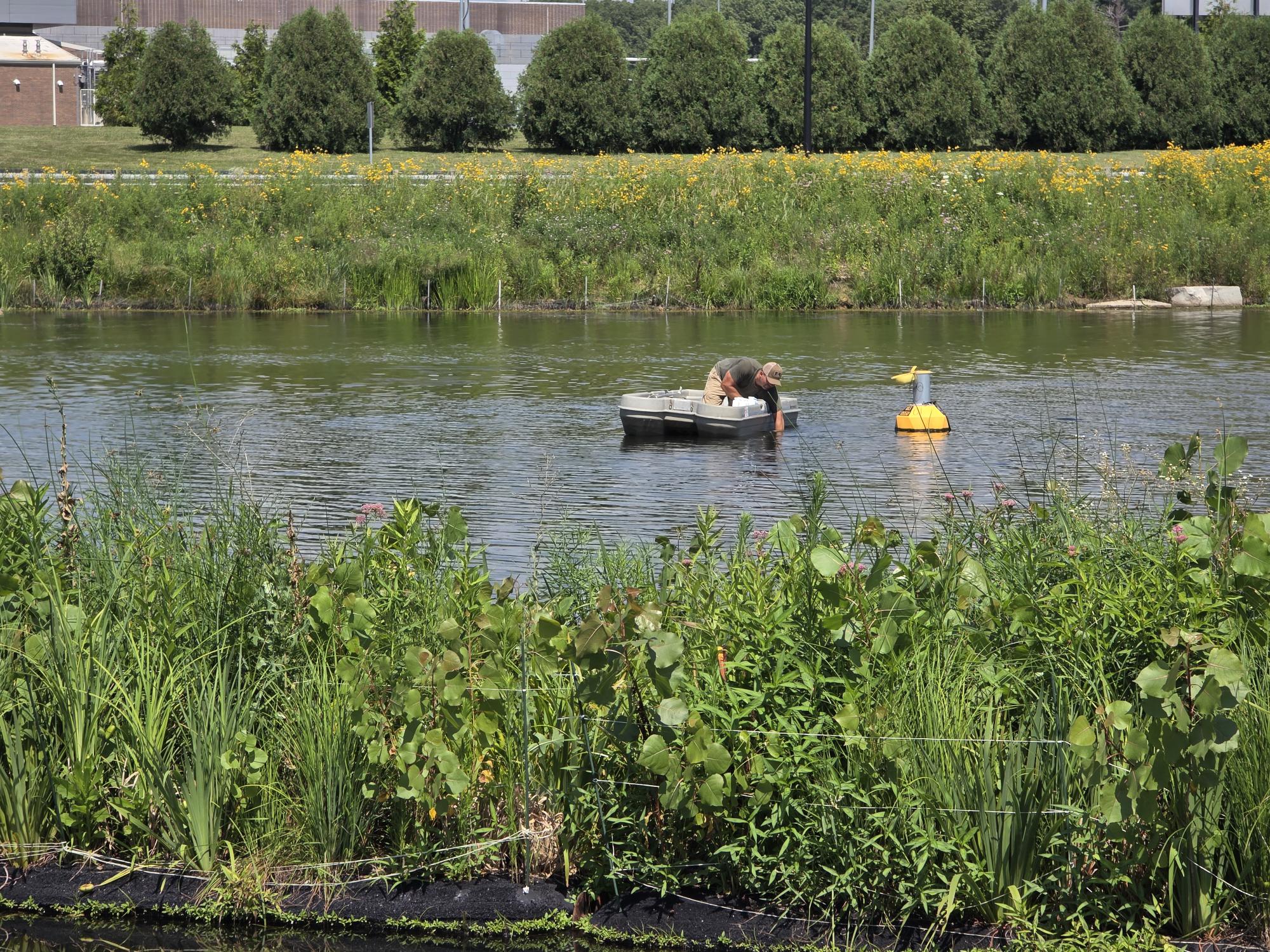
Gulf Hypoxia Action Plan Update August 26, 2026 | Field Studies | Waterborne’s field and data services teams have long supported…
READ MORE
The Global Matchup: Rice Modeling Around the World
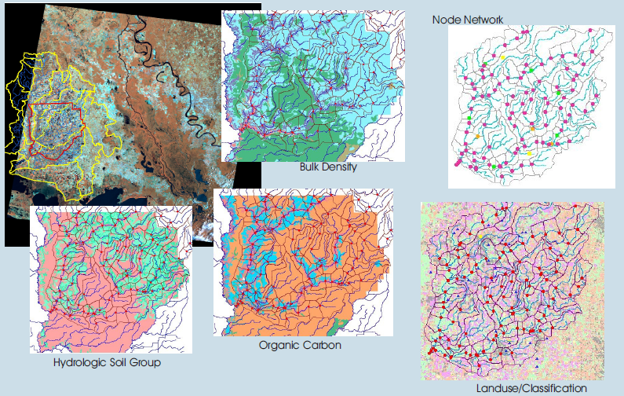
The Global Matchup: Rice Modeling Around the World July 27, 2026 | Modeling | Amy Ritter and Marty WilliamsThis year’s…
READ MORE

Beyond the Spectacle: The Environmental Effects of Fireworks
Beyond the Spectacle: the Environmental Effects of Fireworks July 21, 2026 | Climate Change | Like shooting stars zooming across…
